As hotel prices spike and Airbnb markets tighten, festivalgoers are pitching tents on-site and the economic ripple effect is significant.
Every April, the Coachella Valley transforms into one of the most data-rich consumer behavior experiments on the planet. This year, the story isn't just about who's performing, it's about where people are sleeping, how they're spending, and what that means for every business in a 30-mile radius.
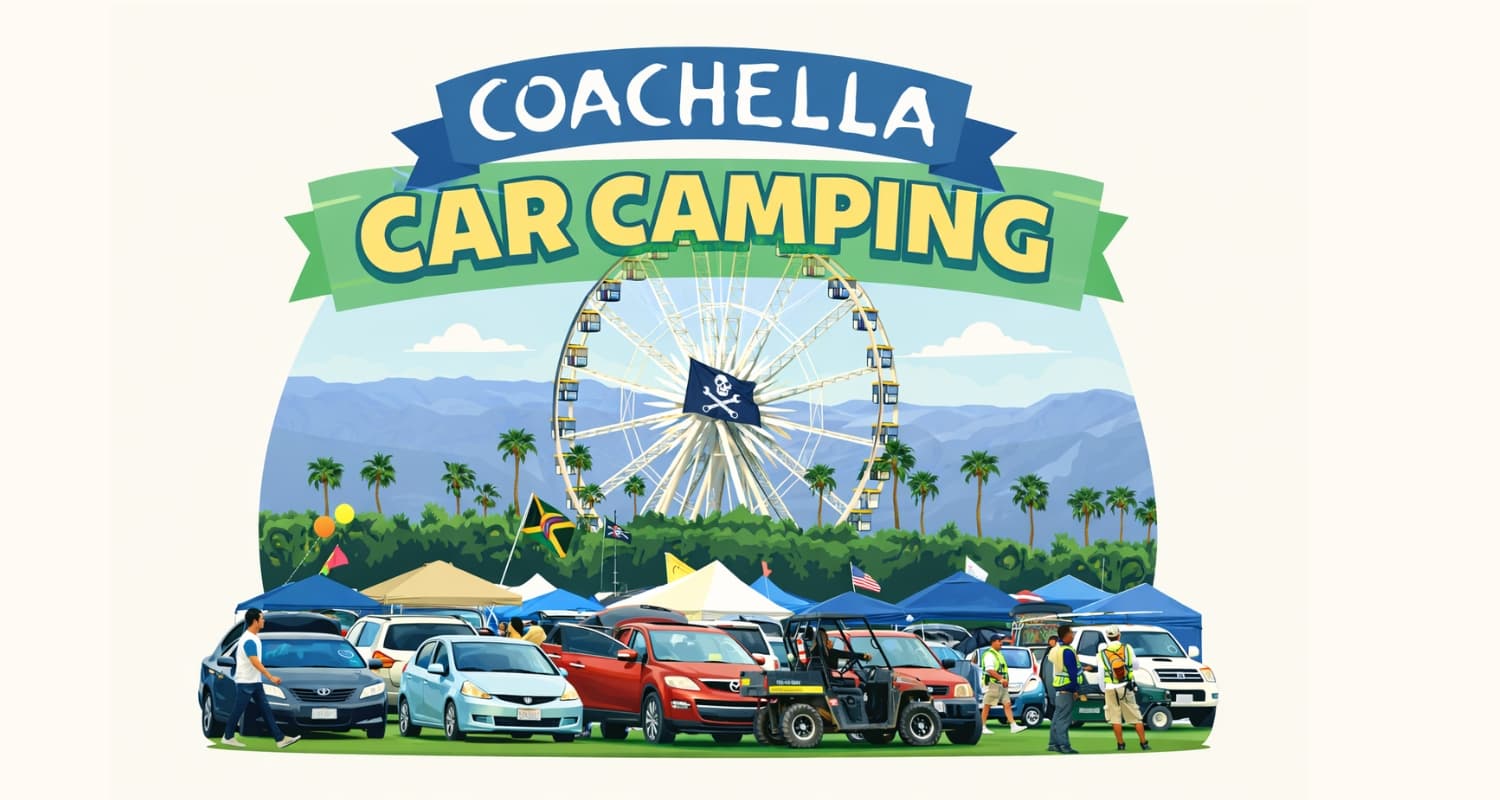
By the time the first cars rolled into the Empire Polo Club campgrounds on Thursday, April 9, a clear behavioral shift was already visible: more festivalgoers than ever are skipping hotels, canceling Airbnb reservations, and choosing to set up camp directly on-site. Understanding that shift and what drives it, is exactly the kind of question location intelligence was built to answer.
The Cost Pressure Behind the Camping Surge
To understand why car camping has surged at Coachella 2026, you have to start with the accommodation market. Hotel prices in the Palm Springs area are running approximately 26% higher than they did during the equivalent festival weekends in 2025 and a staggering 61.6% higher than the two weekends immediately preceding the festival. That's not just inflation. That's supply-demand compression at its most extreme.
Short-term rental platforms haven't offered much relief, either. Reports of last-minute cancellations with hosts relisting properties at significantly higher rates have left many attendees scrambling. First-time camper Amanda Huizar of Los Angeles captured the sentiment bluntly: she had looked at Airbnbs priced at around $700 a night before deciding on-site camping was the more rational choice.
What the Foot Traffic Data Reveals

Here's where location intelligence becomes essential. The surface-level narrative is "people are camping more." But the deeper question for businesses, planners, and brands is: where are those people going when they're not inside the festival grounds?
Foot traffic analysis of prior Coachella years reveals a meaningful multi-year trend. Between 2019 and 2025, hotel and resort visits by Coachella attendees declined noticeably, while visits to retail and dining categories increased with the sharpest gains in the most affordable segments. The 2026 car camping surge accelerates this pattern. When attendees are sleeping on-site, they're not commuting from Palm Springs each morning. They're moving in smaller, more localized loops hitting convenience retailers, nearby gas stations, quick-service food operators, and the kind of experiential retail that clusters around the festival perimeter.
The Geographic Redistribution of Festival Spending
This is the insight that businesses outside the immediate Indio area should pay close attention to. The 30% of travelers who arrive up to three days before the festival early movers who want to secure campsite positioning, explore the area, or attend pre-festival events represent a significant capture opportunity for retailers and restaurants in the broader Greater Palm Springs region.
Local businesses that track foot traffic carefully already know this intuitively. In prior years, retailers in Indio have reported doubling or even tripling their sales volumes during Coachella weekends. The car camping surge doesn't diminish that effect; it concentrates it in a tighter geographic zone around the festival grounds, while simultaneously creating opportunity for businesses that can capture the mobile, campsite-adjacent shopper.
International Visitors Are Choosing Camping, Too
One of the more notable dimensions of the 2026 camping surge is its international character. Visitors from Mexico, South America, and Europe groups that have historically leaned toward hotel accommodations to anchor a more conventional travel itinerary are now showing up in the campgrounds. For many, it started as a cost calculation and became something more. The campground functions as a self-contained community: multilingual, multicultural, and increasingly appealing to travelers who came for the music but stayed for the social experience.
This has important implications for how brands and businesses position themselves around the festival. The Coachella camper in 2026 is not a niche demographic. They are domestic and international, first-time and repeat, budget-motivated and experientially motivated. Their spending behaviors reflect that breadth.
The Brand Opportunity Inside the Camping Economy

For brands, Coachella has long been a marketing priority but the center of gravity is shifting. The festival has evolved from a grungy desert gathering into a global cultural moment that draws more than 125,000 people per day across two weekends. Premium fashion, luxury brands, and consumer goods companies have leaned into this heavily, with off-site experiential activations, influencer partnerships, and branded hospitality spaces.
But as the audience mix tilts toward on-site camping, the physical pathways of festival spending change. Brands that rely on the Palm Springs hotel corridor to reach their target consumer need to rethink their geography. The consumer is increasingly sleeping, eating, and socializing within walking distance of the campground and location data is the clearest tool for tracking exactly where their attention goes when it leaves the main stage.
Looking Ahead: The Camping Trend Has Momentum
There's no indication that accommodation prices in the area will moderate before Coachella 2027. The structural conditions that drove this year's camping surge limited hotel supply, aggressive short-term rental pricing, and increasingly expensive festival tickets requiring payment plans for more than 60% of buyers are not going away. If anything, they're likely to intensify.
That means the behavioral shift toward on-site camping at major festivals is not a 2026 anomaly. It is a new baseline. Businesses and brands that build their festival-season strategy around the traditional hotel-corridor consumer journey will find themselves increasingly out of step with where the actual foot traffic is flowing.
The Coachella Valley has always been a proving ground for consumer trends that eventually show up everywhere else. Pay attention to the campground data this year. It's telling you something about where festival culture — and festival spending is headed.