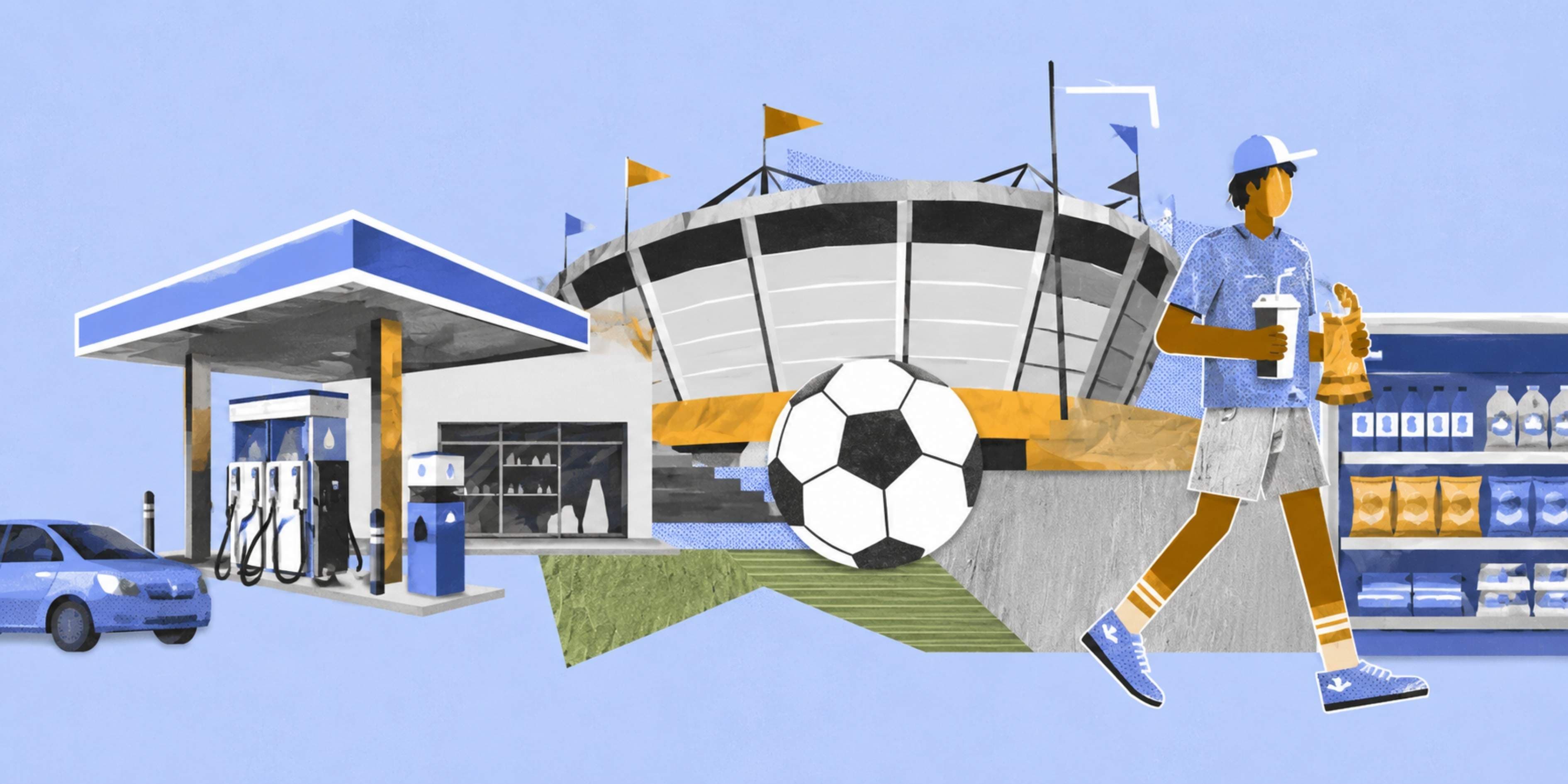
The biggest sporting event ever hosted on North American soil is arriving. Here's how retailers and fuel operators can decode the foot traffic opportunity before the first whistle blows.
When FIFA announced a 48-team, three-nation World Cup for 2026, the headline story was about soccer. But for gas station operators, convenience store chains, and fuel retailers with locations near stadiums, fan zones, highways, and airports, the real story is foot traffic.
At MapZot.AI, we analyze location intelligence signals to help fuel retailers and C-store operators make smarter decisions. And if there's one macro event that will reshape consumer movement patterns this summer, it's the FIFA World Cup 2026.
Why the World Cup Is a Location Intelligence Event, Not Just a Sports Event
Unlike the Super Bowl, a single-city, single-day event, the World Cup spreads across 16 host cities over 39 days. That means sustained, geographically distributed demand surges rather than a single spike. For C-stores and gas stations, this is the difference between catching a wave and surfing an entire season.
Fan movement patterns from airports to hotels to stadiums to fan zones create high-frequency traffic corridors. Gas stations and convenience stores positioned along these corridors stand to see dramatic lifts in transactions, basket sizes, and new customer acquisition.
5 Ways the World Cup Will Shift Foot Traffic at Gas Stations & C-Stores
01. Airport-to-Stadium Corridor Surges. International fans arriving at host city airports will need fuel, snacks, and quick stops en route to venues. Locations within 5–15 miles of major airports in Dallas, New York/NJ, LA, Miami, Seattle, and Kansas City will see outsized traffic lifts on match days.
02. Fan Zone & Watch Party Spillover. Designated fan zones, outdoor viewing areas set up in downtown cores draw massive crowds that don't drive to stadiums. C-stores near fan zones will absorb walk-up traffic from pre- and post-event dwell time.
03. Interstate Road Trip Demand. Americans will road-trip between host cities. Especially the Dallas–Houston–Kansas City triangle and the LA–San Francisco corridor. Highway-adjacent fuel stops are positioned for sustained multi-week lifts.
04. Time-of-Day Pattern Shifts. Evening kickoff times (typically 3PM, 6PM, and 9PM ET) will compress pre-match traffic into mid-afternoon rush windows, different from typical fuel retail peaks. Staffing and inventory models need to adapt.
05. Snack & Beverage Basket Expansion. Sports fans are impulse buyers. Tournament energy means C-stores near high-traffic corridors will see elevated beer, energy drink, snack, and ready-to-eat sales, with basket sizes potentially 20–35% above baseline.
Historical Comps: What Major Sporting Events Do to C-Store Traffic
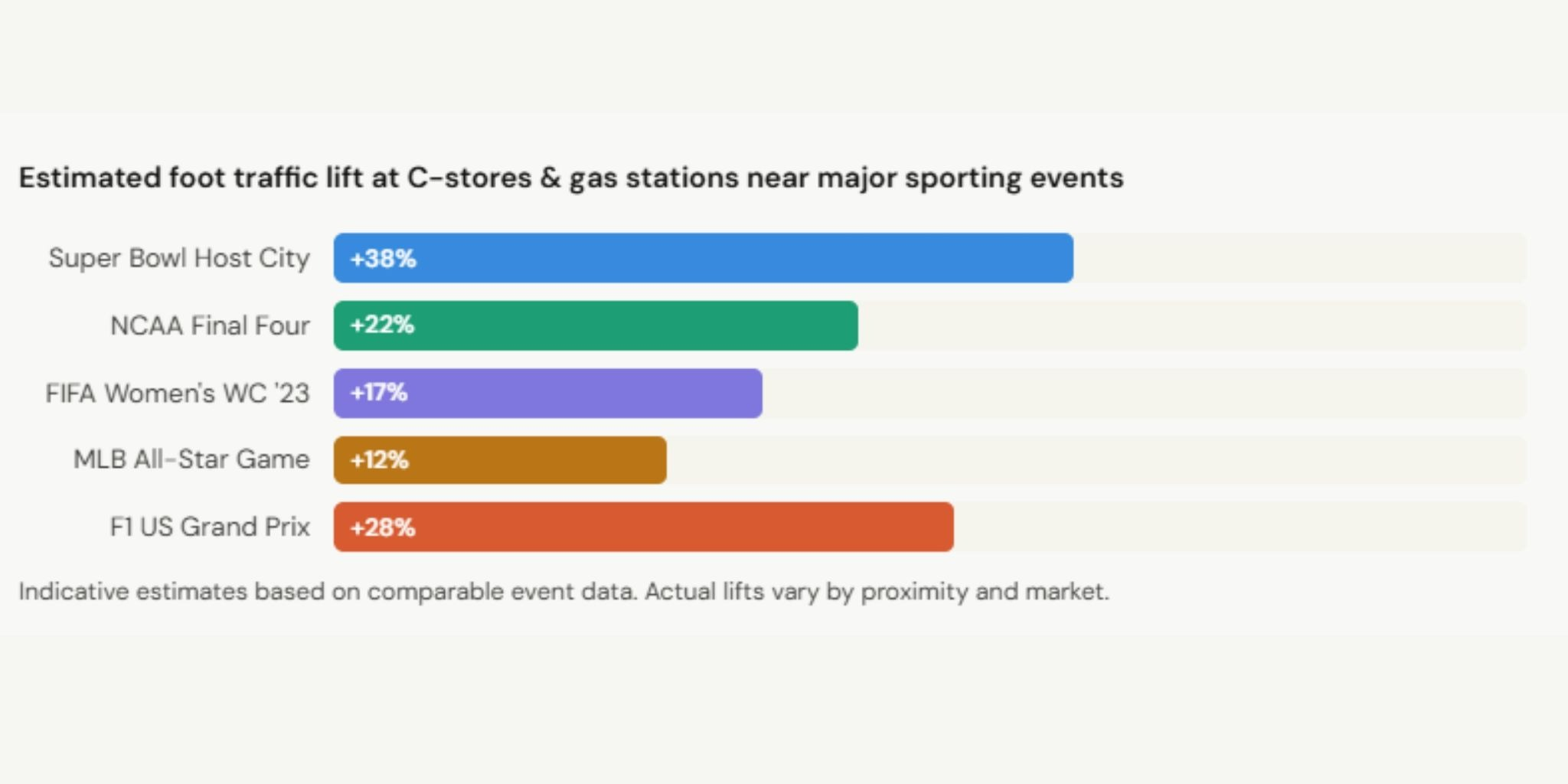
While direct World Cup data for North America is limited, comparable mega-events provide directional benchmarks for foot traffic lifts at nearby fuel retailers and C-stores.
Host City Deep-Dive: Where the Traffic Will Hit Hardest
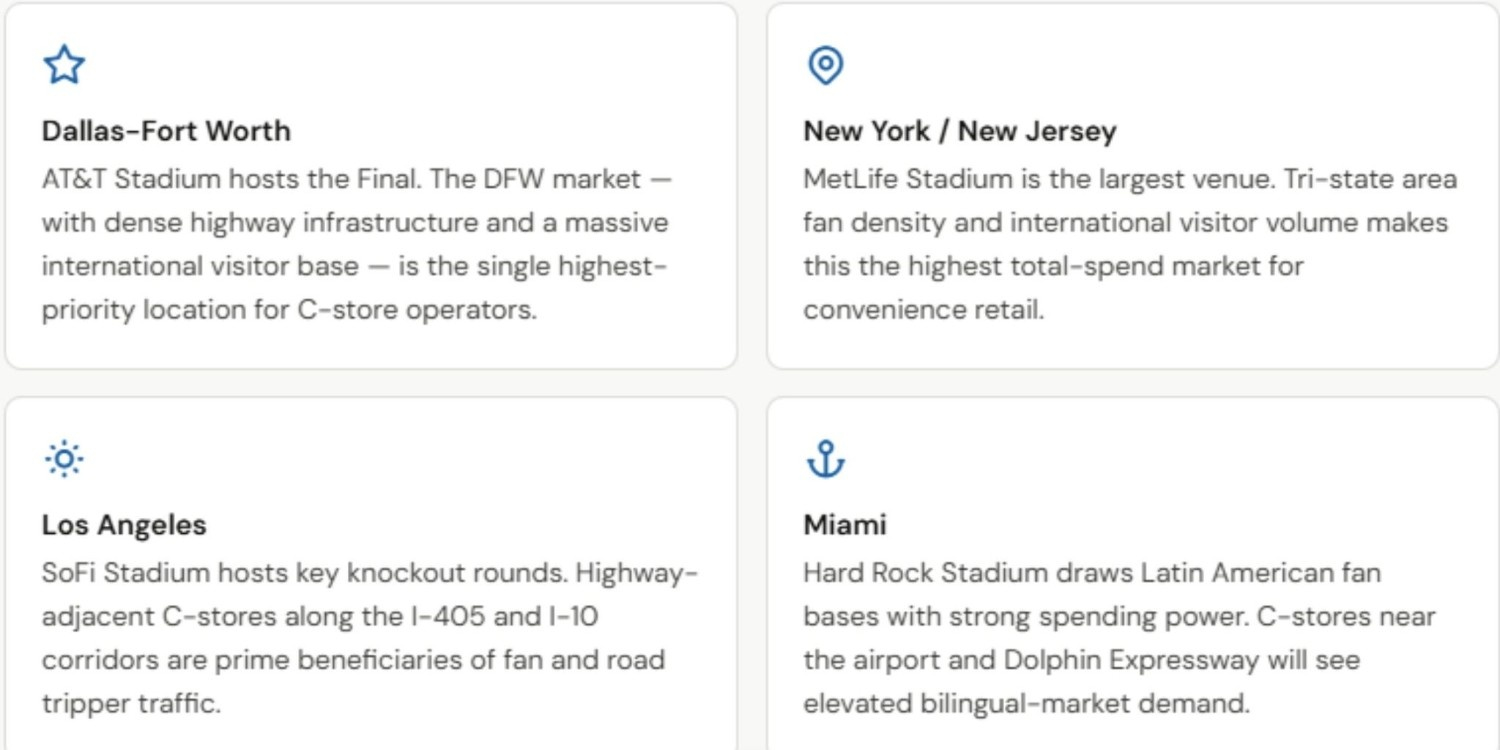
Not all 16 host cities carry equal weight. The number of group stage matches, stadium capacity, and road trip catchment area define which markets will see the most dramatic retail foot traffic shifts.
What C-Store & Gas Station Operators Should Do Right Now
1. Map Your Proximity to the Traffic Corridors
The first step is knowing where you sit relative to stadiums, fan zones, major airports, and interstate corridors in host cities. A location 8 miles from a stadium on the most-traveled inbound route has a fundamentally different opportunity than one 3 miles away but off the primary traffic path.
Tools like MapZot.AI let operators visualize their location relative to event venues, estimated traffic flows, and competitor density — so you're not guessing about your position in the opportunity landscape.
2. Adjust Inventory Ahead of Match Day Windows
International soccer fans skew toward beer, energy drinks, ready-to-eat foods, and novelty snacks. Pre-match dwell time means longer in-store visits. Prioritize SKU availability in these categories starting 72 hours before each match in your city. Don't forget phone chargers, travel-size toiletries, and local/regional items that international visitors specifically seek out.
3. Re-model Staffing Around Kickoff Clusters
Match schedules are predictable months in advance. With three daily kickoff windows (afternoon, early evening, and prime time), operators in host markets should pre-schedule peak staffing to align with pre-match traffic — typically 90 minutes before kickoff and 45 minutes post-match.
4. Run Location-Targeted Promotions
Digital loyalty programs and geofenced promotions allow C-stores to specifically target consumers within match-day traffic zones. Offer soccer-themed bundles, fan discounts, or limited-time items tied to tournament milestones. This isn't just about driving one transaction — it's about converting tournament visitors into long-term loyalty members.
5. Monitor Competitor Positioning in Real Time
Your competitors are reading the same playbook. Use location intelligence data to track whether nearby fuel retailers are expanding their footprint, launching promotions, or adjusting hours in response to World Cup demand. MapZot.AI surfaces competitive signals — new locations, closures, and market gaps — so you can respond proactively rather than reactively.