
Every year, fitness intentions spike. But 2026 is different — the data reveals not just a seasonal resolution bump, but a genuine, structural reshaping of how, where, and why Americans exercise. The story has three protagonists: yoga's surprising ascent, the booming home equipment market, and a generation that treats every workout as a social event.
The Cardio Crown Is Wobbling
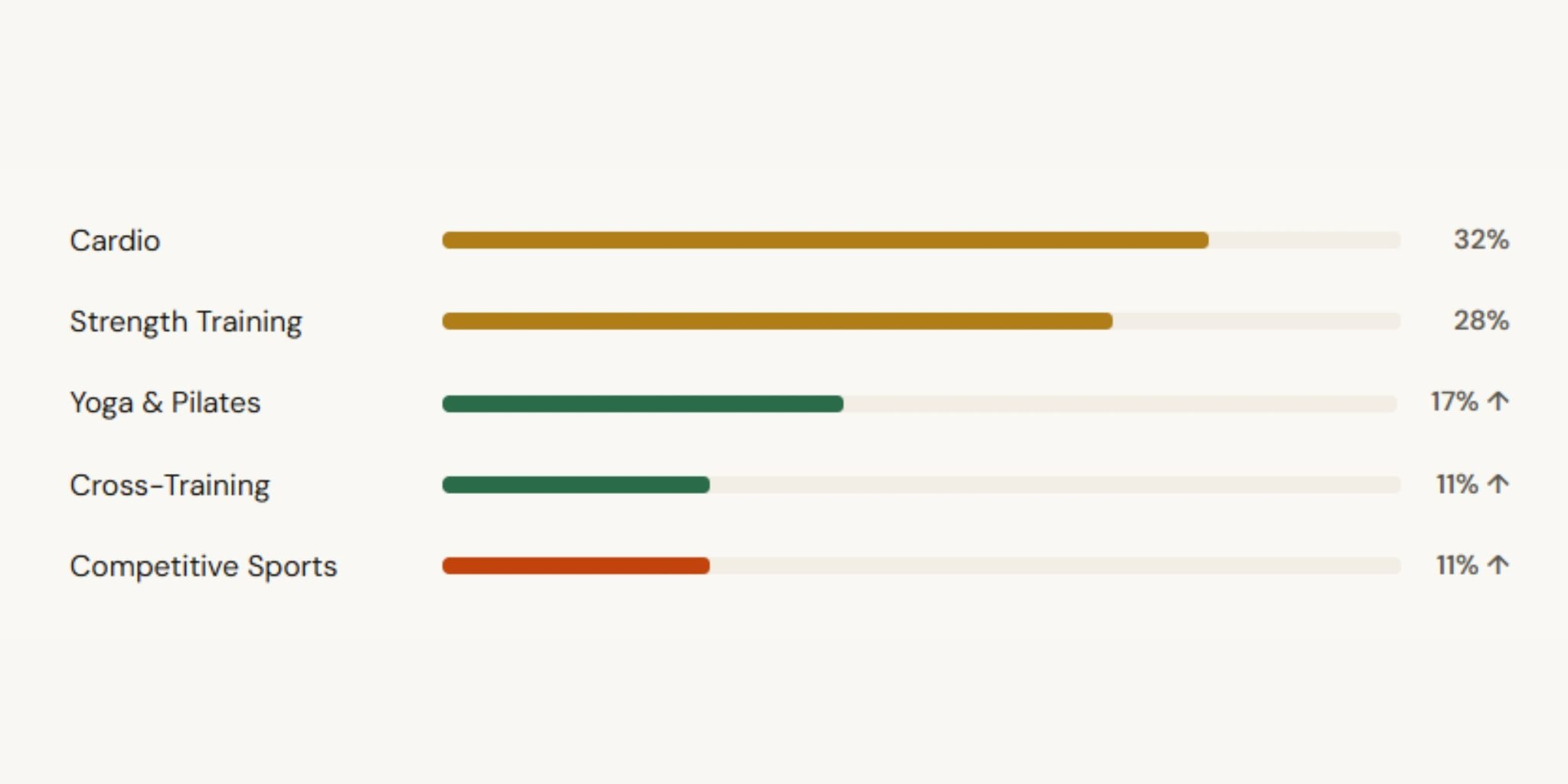
Cardio still leads, 32% of regular exercisers say it anchors their routine, followed by strength training and weight lifting at 28%. But those two pillars have been the dominant story for decades. The more meaningful movement is happening at the edges, where three upstart modalities are quietly rewriting the rules.
Cross-training climbed three percentage points to reach 11%. Competitive sports and everything from weekend pickleball leagues to adult soccer, matched that figure, also up two points. But the headline belongs to yoga and Pilates, which posted the single largest jump of any category: four full percentage points, rising from 13% to 17%.
Why Yoga Is Winning 2026
For years, yoga occupied a comfortable but modest niche, the calmer alternative for people who didn't want to lift weights or pound pavement. That perception is over. In 2026, yoga and Pilates are the fastest-growing workout categories in the United States, and the drivers behind that growth are both practical and philosophical.
Low impact, high return
Science has caught up with the practice. Yoga reduces joint strain while simultaneously improving strength and mobility, a combination that's nearly impossible to replicate with traditional cardio. For an aging population concerned about longevity, and for a younger generation that has watched parents struggle with overuse injuries, that trade-off is deeply compelling.
The longevity pivot
Functional fitness, training your body to move well over the long arc of a life, has emerged as the organizing philosophy of 2026's fitness culture. Yoga fits neatly inside that frame. As one researcher put it, the question has shifted from "how hard can I push today?" to "how well will I move at 70?" Yoga answers the second question in ways that a 45-minute HIIT session simply cannot.
The Living Room Is the New Gym Floor
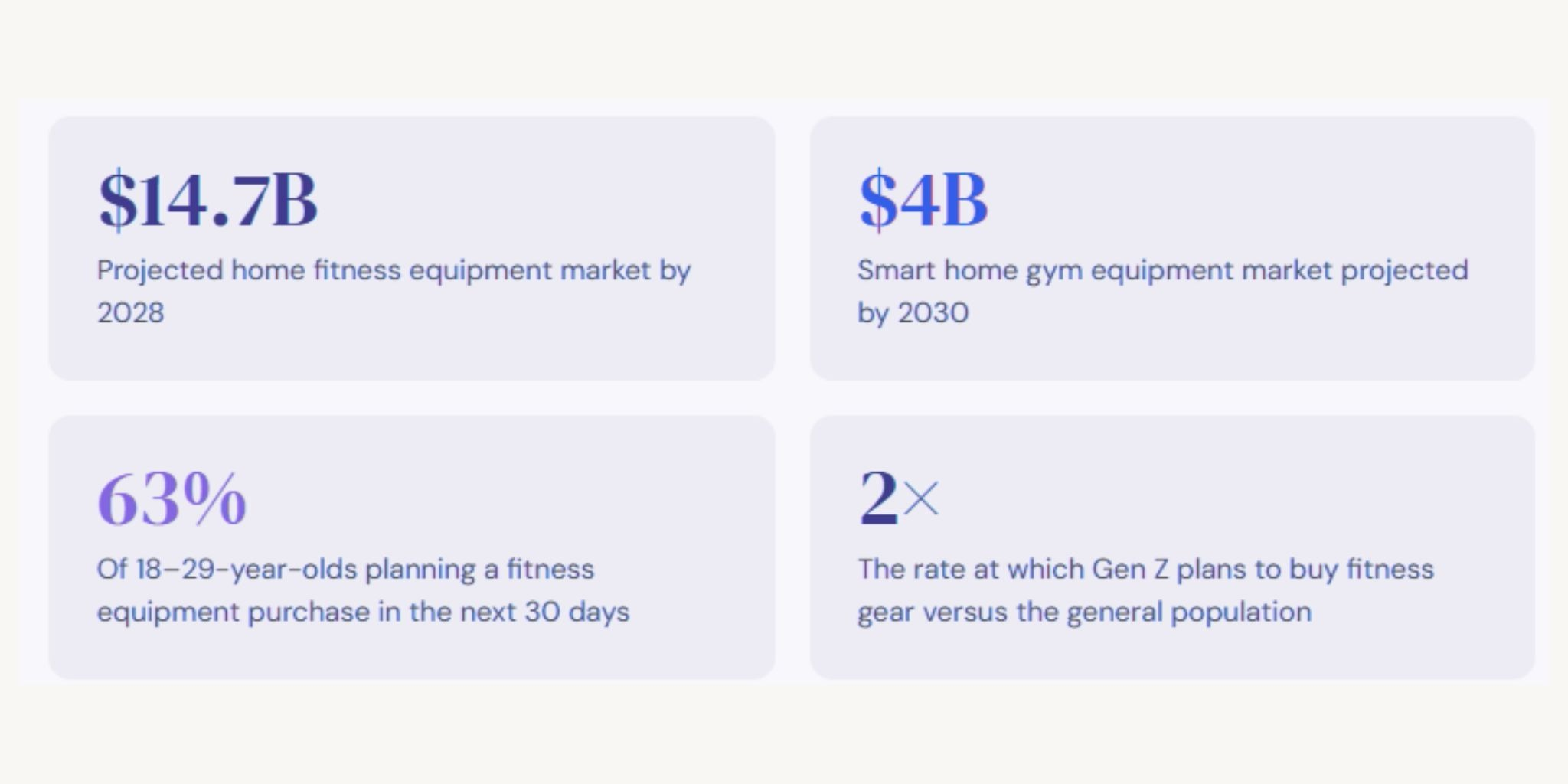
The hybrid fitness model, splitting training between home and a commercial gym didn't evaporate when pandemic restrictions were lifted. It has become a habit. In 2026, Americans aren't choosing between home and gym; they've integrated both into a seamlessly flexible routine, and they're spending accordingly.
That 63% figure is the one to stop on. Nearly two-thirds of adults aged 18 to 29 plan to purchase fitness equipment within 30 days, nearly double the rate of the general population. This generation isn't just talking about health; they are actively investing in infrastructure for it, converting bedrooms and garages into micro-gyms equipped with smart mirrors, resistance systems, and, increasingly, a simple yoga mat and a streaming subscription.
What they're buying
The home equipment boom isn't a single product story. It spans a wide range: resistance bands and free weights at the accessible end; smart connected equipment like AI-enabled mirrors and interactive bike-and-rower systems at the premium end. Between them sits a rapidly growing category of mid-tier, tech-adjacent gear, adjustable dumbbells, modular pull-up systems, and recovery tools like massage guns and compression boots.
When the Workout Becomes the Social Event
Here is perhaps the most consequential finding for anyone building products or experiences in the fitness space: Gen Z doesn't separate fitness from social connection. For this generation, the gym isn't just a place to train, it is a place to belong.
Since 2024, more Americans across all demographics report that the social dimension of exercise motivates them to work out. But Gen Z leads this shift by a significant margin: they are 65% more likely than the average person to cite social connection as a primary workout motivator. Read that number slowly. It isn't a marginal edge. It is a fundamentally different relationship with physical activity.
Three Moves Every Fitness Brand Should Make Now
1. Anchor your yoga and Pilates story
The four-point jump in yoga participation isn't noise, it's signal. Whether you're a fitness apparel brand, a studio operator, a supplement company, or a streaming platform, you need a clear, credible yoga and Pilates narrative. This category is moving from niche to mainstream, and the brands that establish authority now will be hardest to displace when the segment matures.
2. Treat home fitness as infrastructure, not impulse
Consumers, especially young ones are building home gyms the way a previous generation built home offices: deliberately, iteratively, and with a long-term view. Retail strategy, product development, and content marketing should reflect that intent. The purchase is rarely one big transaction; it's a series of considered investments over months and years. Meet buyers at each stage of that journey.
3. Build for belonging, not just performance
The fitness consumer of 2026 wants to feel part of something. Group formats, community challenges, shared achievement systems, and live social features are no longer nice-to-haves. The brands and platforms that engineers belonging and make people feel genuinely connected to other people through movement, will generate the kind of loyalty that no retention campaign can buy.