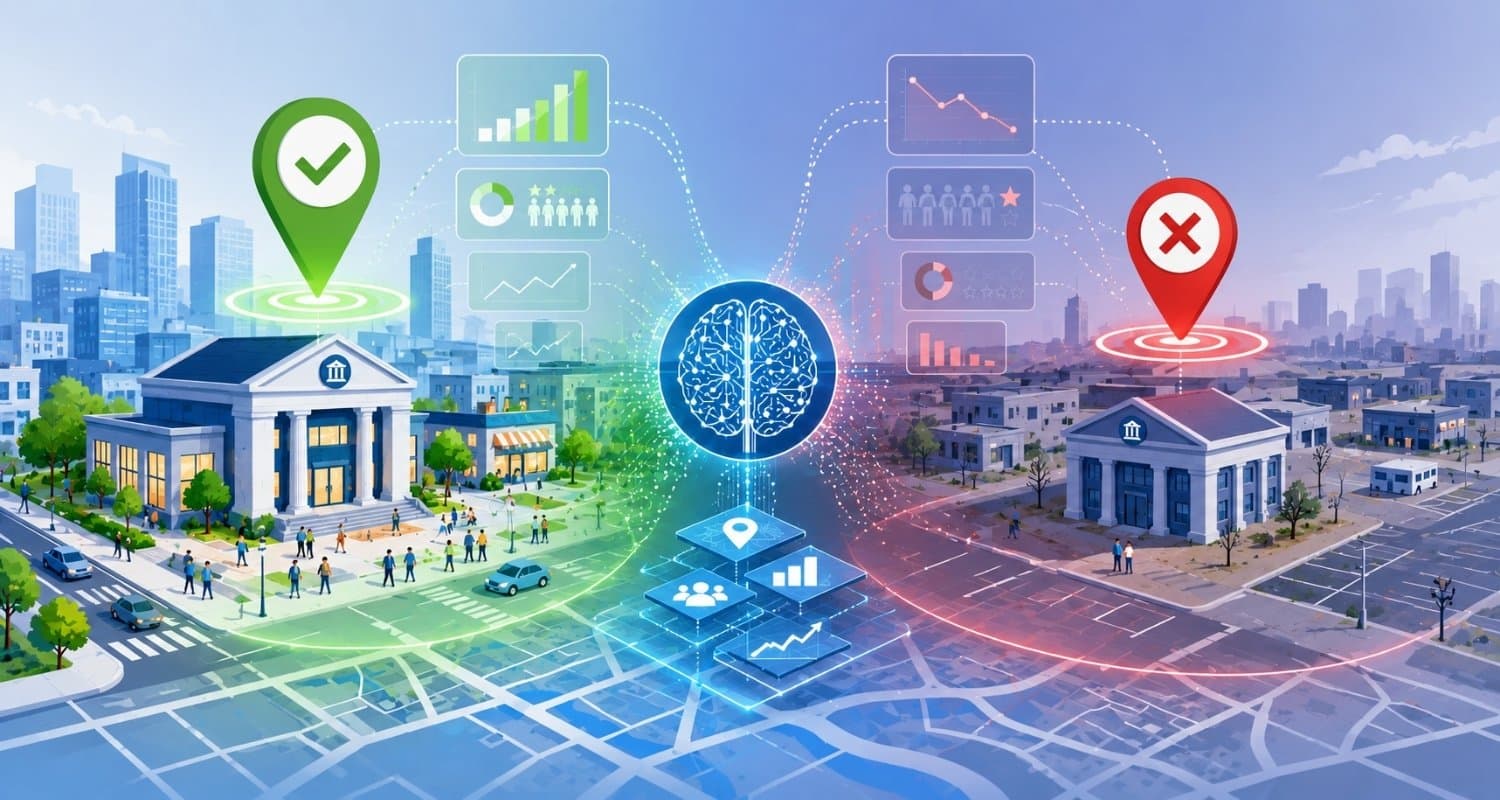
In 2026, banks are deploying agentic AI at scale. The ones winning aren't just automating chatbots they're using location intelligence to make every physical and lending decision smarter, faster, and harder to get wrong.
The Branch That Looked Perfect on Paper
Here's a scenario every regional bank strategy team has lived through at least once: A new branch is opened in a suburb that "looked promising on paper." Three years later, foot traffic is flat, deposit growth is stagnant, and the neighboring credit union, which opened six months earlier is already at capacity. The data was available. Nobody looked at the right signals.
That's the old world. In 2026, the banks moving fastest aren't just deploying AI for fraud detection or chatbots. They're using location intelligence to answer the questions that have always been hardest: Where should we expand? Which small businesses in our portfolio are quietly becoming credit risks? Which market is underserved and ready to absorb a new branch?
The Branch Is Back. But Not the Way You Think.
For a decade, the dominant narrative in banking was simple: digital kills branches. The math seemed obvious, why pay rent when customers bank on their phones?
2026 Banking Trends report upended that assumption. In a world flooded with AI-generated content and autonomous financial tools, physical branches are becoming trust anchors. They project solidity. Customers confused by multiplying fintech options and AI advisors look for something tangible. The branch is no longer a transaction hub it's a relationship hub.
But here's the catch: being in the wrong location is worse than having no branch at all. A branch in a low-density, low-income corridor with shrinking foot traffic is a liability that compounds. The question isn't whether to have branches. It's exactly where to put them, and which existing ones deserve investment versus consolidation.
The Loan Officer Problem Has a Location Dimension Nobody Talks About
Small business lending is one of the most valuable and most risky things a regional bank does. And for most of the last century, underwriting decisions were made on financial statements alone revenue, liabilities, credit score, DSCR. Clean. Quantifiable. And dangerously incomplete.
What financial statements don't tell you: Is the restaurant at this address losing foot traffic to a new competitor three blocks away? Is the retail strip mall anchored by a grocery store that's about to close? Is this neighborhood on the leading edge of gentrification, or the trailing edge?
Why 2026 Is the Year Location Data Goes From "Nice to Have" to "Table Stakes"
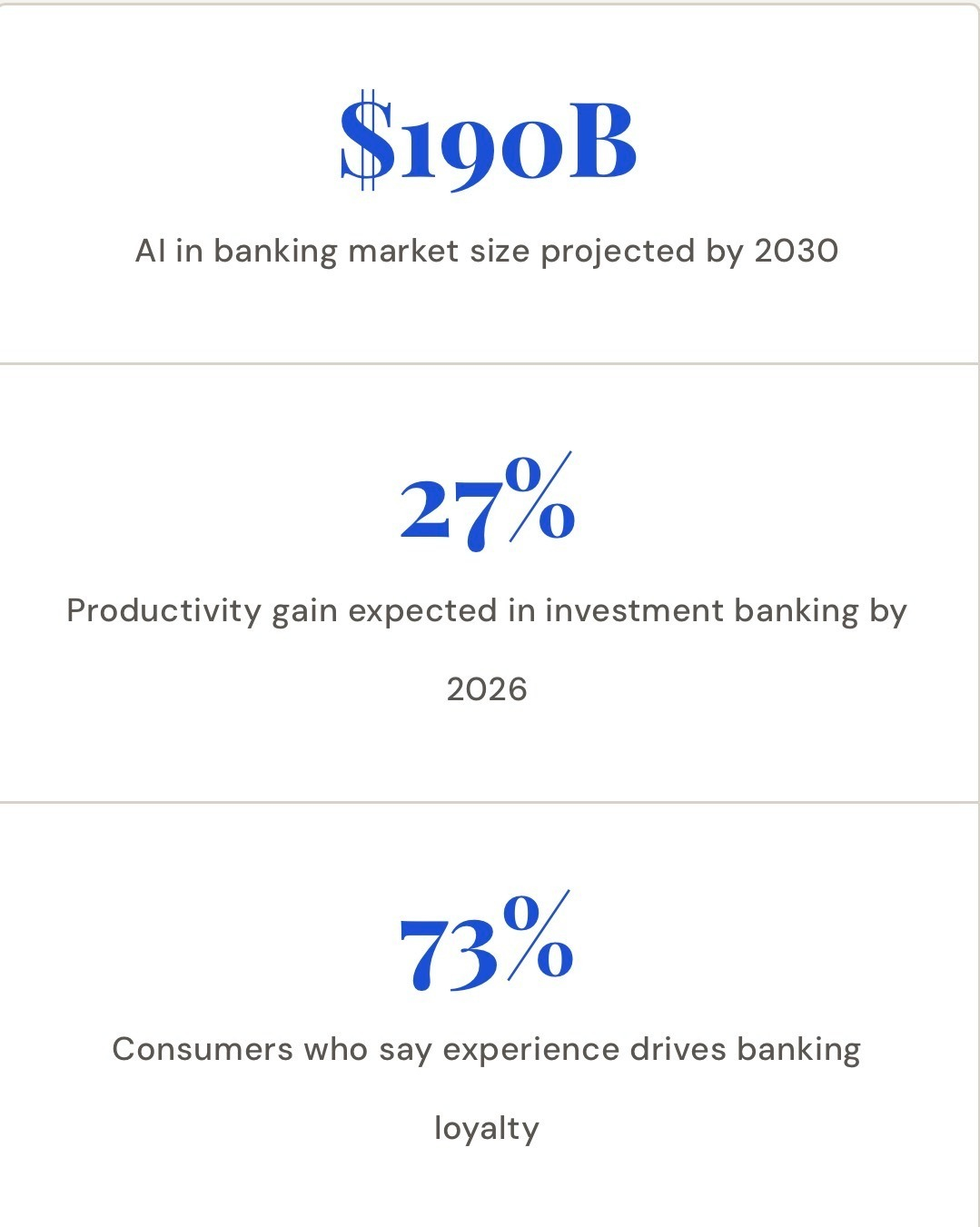
The banking industry is undergoing its most significant technology shift in decades. Agentic AI, autonomous systems that can make real-time decisions, execute complex workflows, and continuously learn is moving from pilot programs to enterprise-wide deployment.