The pet care industry is one of the most resilient retail sectors in the United States and at its center stand two giants: PetSmart and Petco. Both chains carry a remarkably similar product mix. Both serve the same household. Yet when you map them through the lens of AI-driven location intelligence, striking differences emerge in how each brand reads the market, picks its trade areas, and positions itself for growth.
Two Giants, One Territory
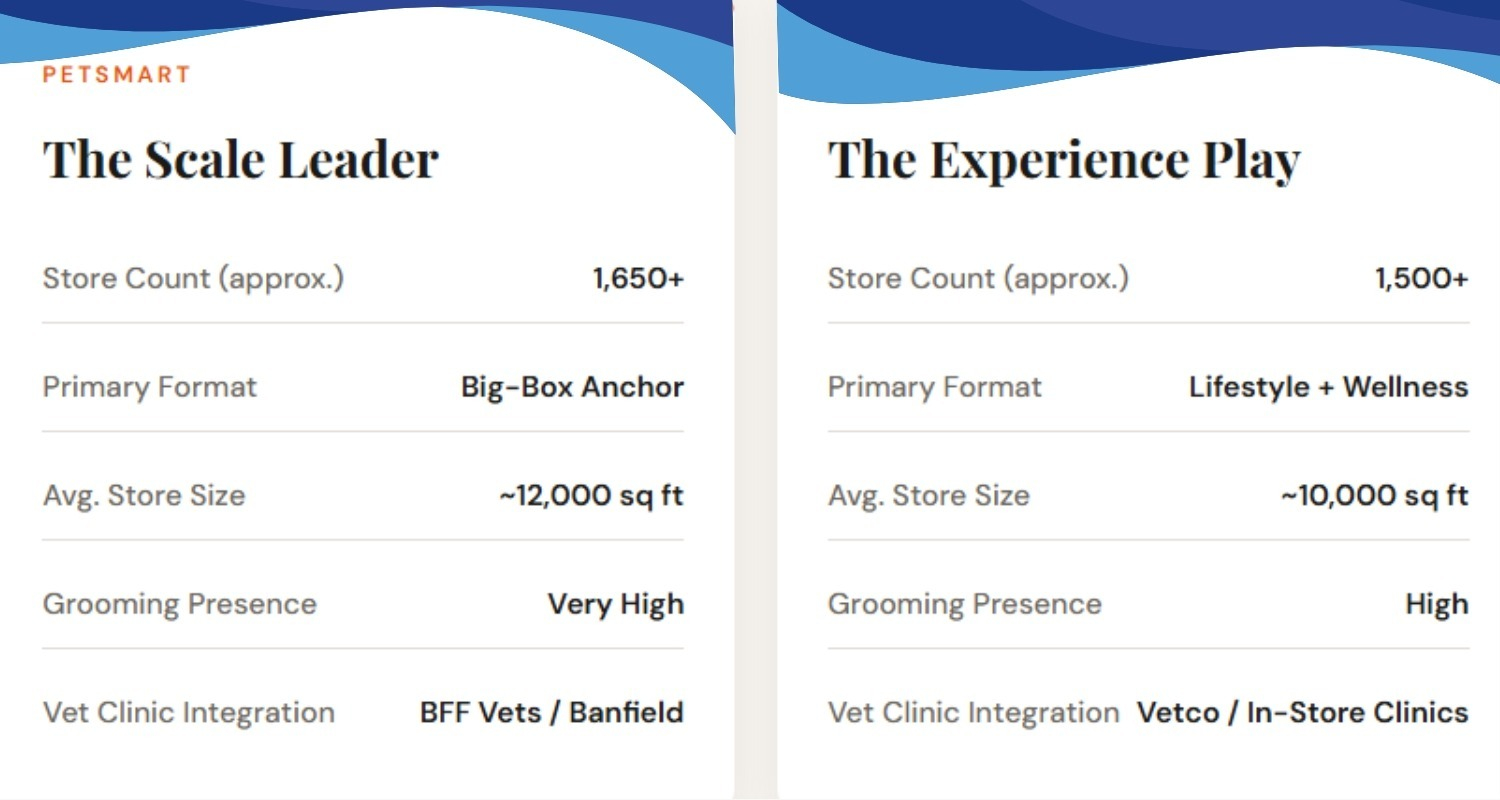
On the surface, PetSmart and Petco appear nearly identical. Both offer food, supplies, grooming, and veterinary services. Both anchor strip malls and power centers from coast to coast. Both are fighting for the same wallet, the American pet owner who now spends, on average, more per year on their animals than on their own clothing.
But location strategy is never just about where you are today. It's about where demand is moving, which trade areas are under-penetrated, and how your footprint stacks up against a competitor that has spent decades learning the same map. MapZot.AI's place intelligence layer lets analysts answer these questions not with intuition, but with data.
What Location Data Actually Tells Us
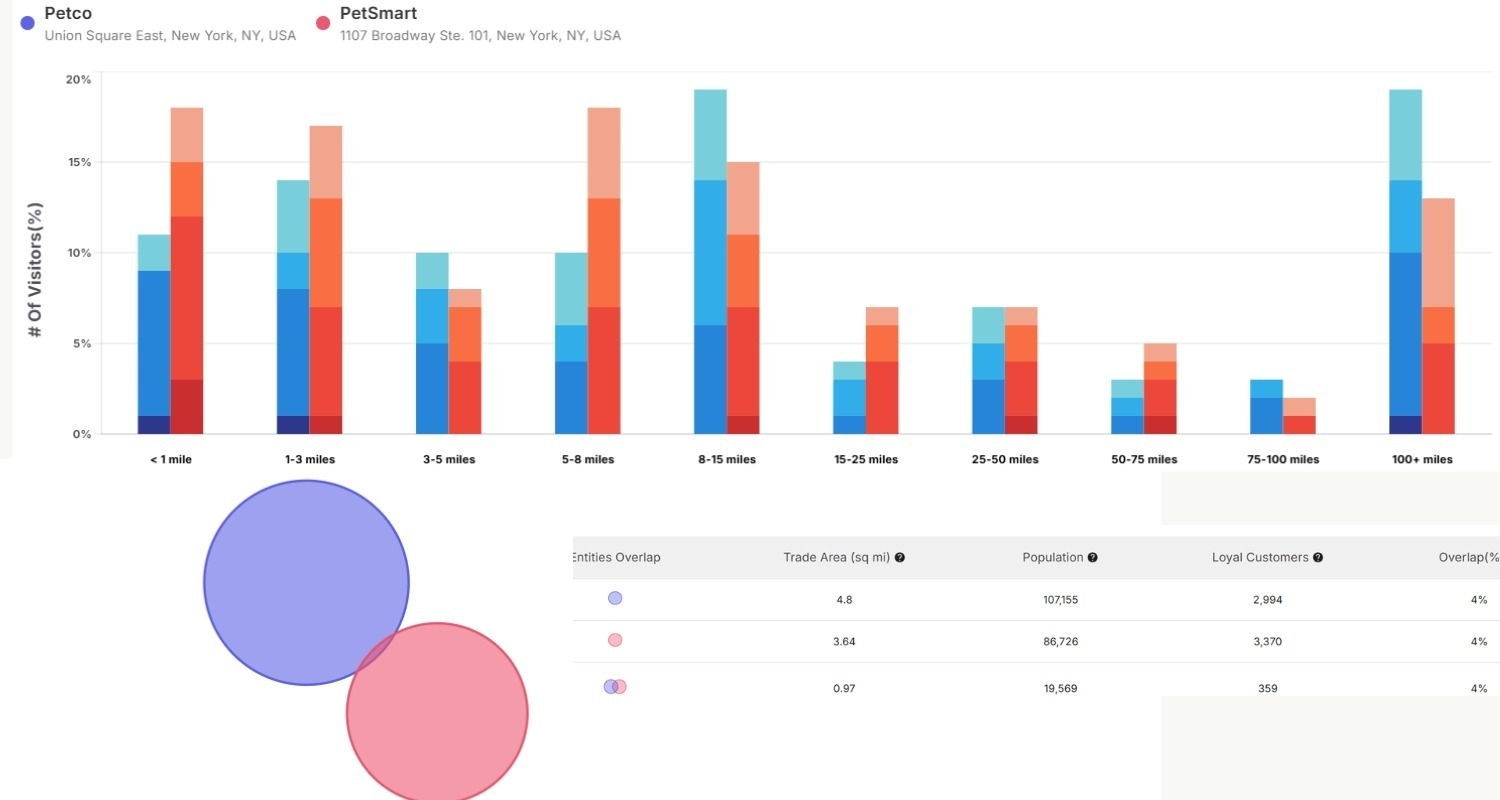
When MapZot.AI runs a location intelligence pass across both chains' footprints, three strategic patterns emerge. These aren't conclusions from a single dataset; they're consistent signals visible across trade area analysis, co-tenancy mapping, and demographic clustering.
The co-location pattern in major metros is particularly telling. Rather than fleeing competition, both brands appear to accept and even benefit from proximity. The shared trade area logic: when one brand pulls pet-owner traffic to a corridor, both stores capture more of it. Location intelligence platforms like MapZot.AI call this a demand attractor cluster.
What Retailers & Investors Can Learn
Whether you're a real estate analyst evaluating a shopping center lease, a private equity team sizing the pet retail category, or a brand strategist benchmarking your own footprint, the PetSmart vs. Petco location story carries transferable lessons.
So, Who Wins the Location Game?
Declaring a single winner misses the point. PetSmart leads on raw coverage and mid-market density. Petco leads on lifestyle positioning and coastal urban penetration. Both have meaningful white space remaining and both are racing to fill it.
What the location data makes clear is that neither brand has finished building its map. The pet industry's relentless growth, now a $150B+ annual market in the U.S., means demand keeps outpacing supply in emerging suburbs, secondary cities, and underserved rural corridors.
The real winner of the location game, in the end, will be the chain that pairs human site-selection expertise with AI-powered intelligence moving from reactive infill to proactive, demand-led expansion before the competition even sees the opportunity on the map.
That's exactly the edge MapZot.AI is built to deliver.