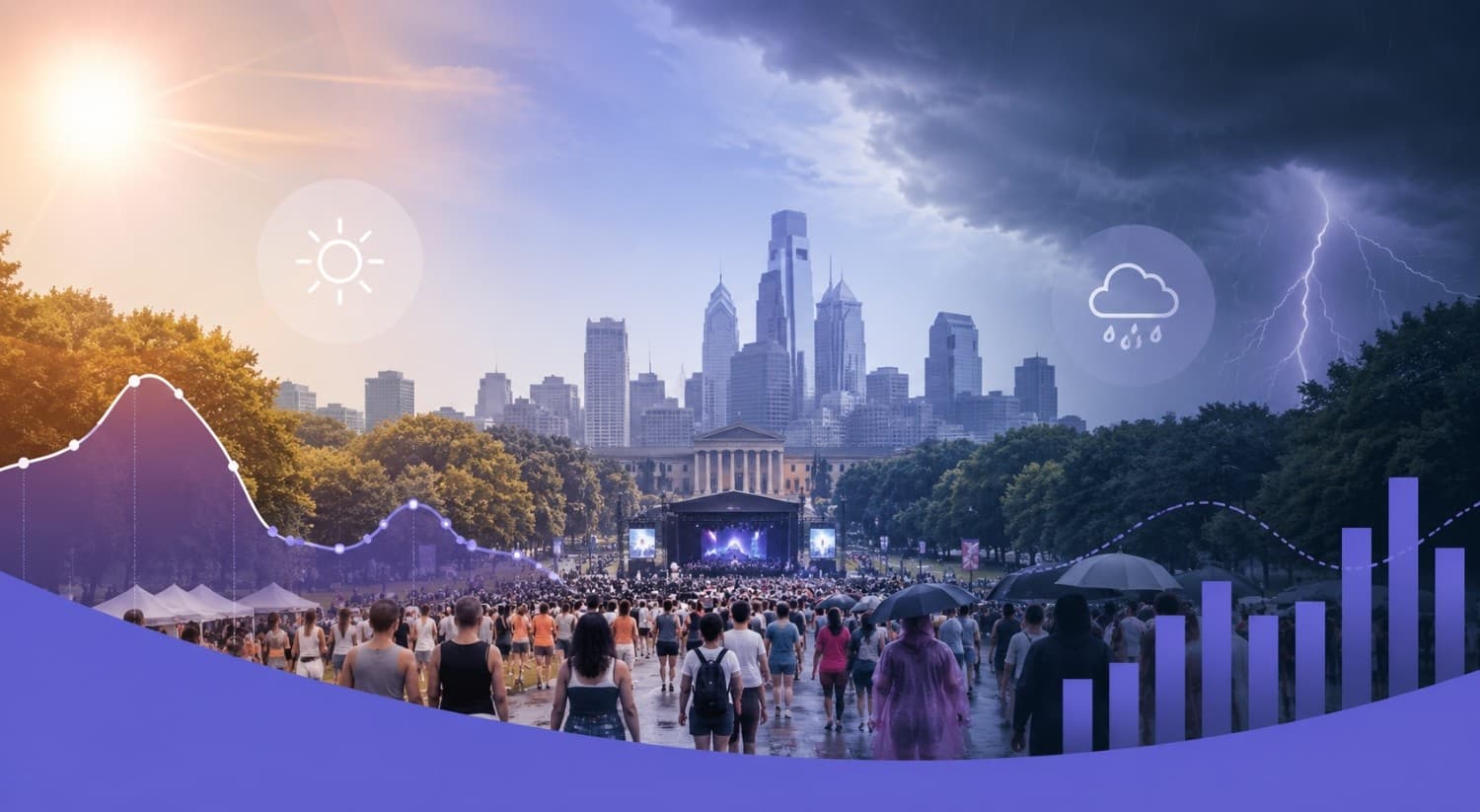
There are events, and then there are once-in-two-hundred-and-fifty-years events. Philadelphia's "One Philly: Unity Concert for America" on the Benjamin Franklin Parkway was built to be the latter, a six-hour, star-studded celebration of the nation's semiquincentennial anchored by Christina Aguilera, The Roots, Jill Scott, Meek Mill, Will Smith, DJ Jazzy Jeff, Seal, and a lineup deep enough to headline a festival on its own. But if you were tracking foot traffic, dwell time, and crowd flow on the Parkway this July 4th, the real story wasn't just who took the stage. It was what the sky did while they were on it.
This is the kind of event that location intelligence exists to explain. A single day, two competing forces, extreme heat pulling people away and a marquee, once-in-a-lifetime moment pulling them back in, and a live, real-time test of how resilient a city's biggest gathering can be when the weather refuses to cooperate.
A Milestone Celebration Built on the Parkway
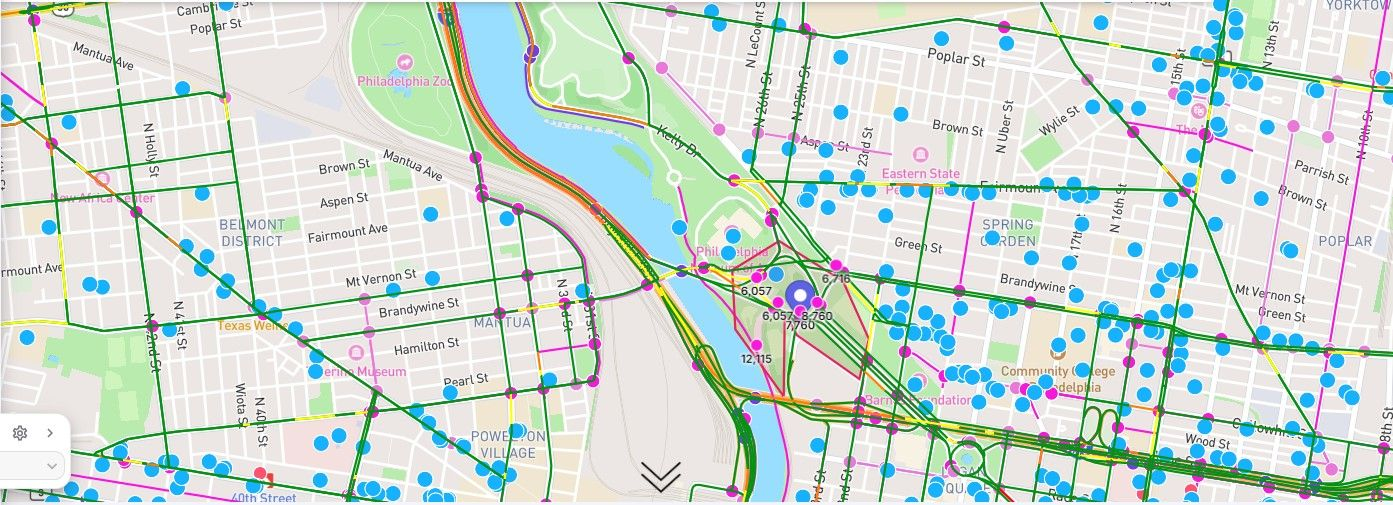
The City of Philadelphia treated this year's Fourth of July as the centerpiece of its America250 programming, and it planned accordingly. The free concert on the Ben Franklin Parkway was headlined by Christina Aguilera, alongside hometown favorites Jill Scott and The Roots, with "Fresh Prince of Bel-Air" co-stars Will Smith and DJ Jazzy Jeff reuniting for the occasion. Add in Meek Mill, Seal, Kathy Sledge, and a six-hour runtime hosted by Wanda Sykes, and the city wasn't just planning a concert, it was planning for a crowd unlike any single-day gathering Philadelphia had seen in years.
The infrastructure reflected that scale. The city rolled out an interactive story map so attendees could find entrances, misting stations, water refill points, and medical tents before ever stepping onto the Parkway, and it closed the inner lanes from 20th Street to Binswanger Triangle days in advance to manage the anticipated volume. Fireworks were scheduled for 11:30 p.m., positioned to cap the night over the Philadelphia Museum of Art a natural, camera-ready close to a day the city had spent two years planning.
The First Disruption: A Heat Wave That Rewrote the Week
Long before the storms arrived, heat was already shaping attendance patterns across the city's Fourth of July programming. Temperatures climbed into the triple digits in the days leading up to the Parkway concert, and the impact showed up immediately in cancellations rather than just discomfort. The Salute to Independence Semiquincentennial Parade, a procession roughly two years in the planning, expected to draw around 10,000 participants, was called off entirely due to the heat. Independence National Historical Park's own Fourth of July event was scrapped for the same reason.
That's the pattern location analytics teams see again and again with extreme heat events: it doesn't just suppress turnout at the margins, it eliminates entire event nodes from the map before the primary event even begins. Philly POPS at Independence Park pushed forward with Idina Menzel despite the heat wave forcing the cancellation of other events nearby, and city officials publicly confirmed the free Parkway concert would proceed "rain or shine" , a commitment that, as the day unfolded, was about to be tested in a way nobody fully anticipated.
Attendees adapted in real time. Visitors described being drenched from the walk to the security gate alone, and cooling infrastructure, misting stations scattered across the Parkway lawn — became as much a draw as the stage itself. One attendee summed up the mood well: this was one of the hottest days for the celebration, but with only one 250th anniversary to experience, nothing was going to keep her away.
The Comeback: Crowds Return Well Past Midnight
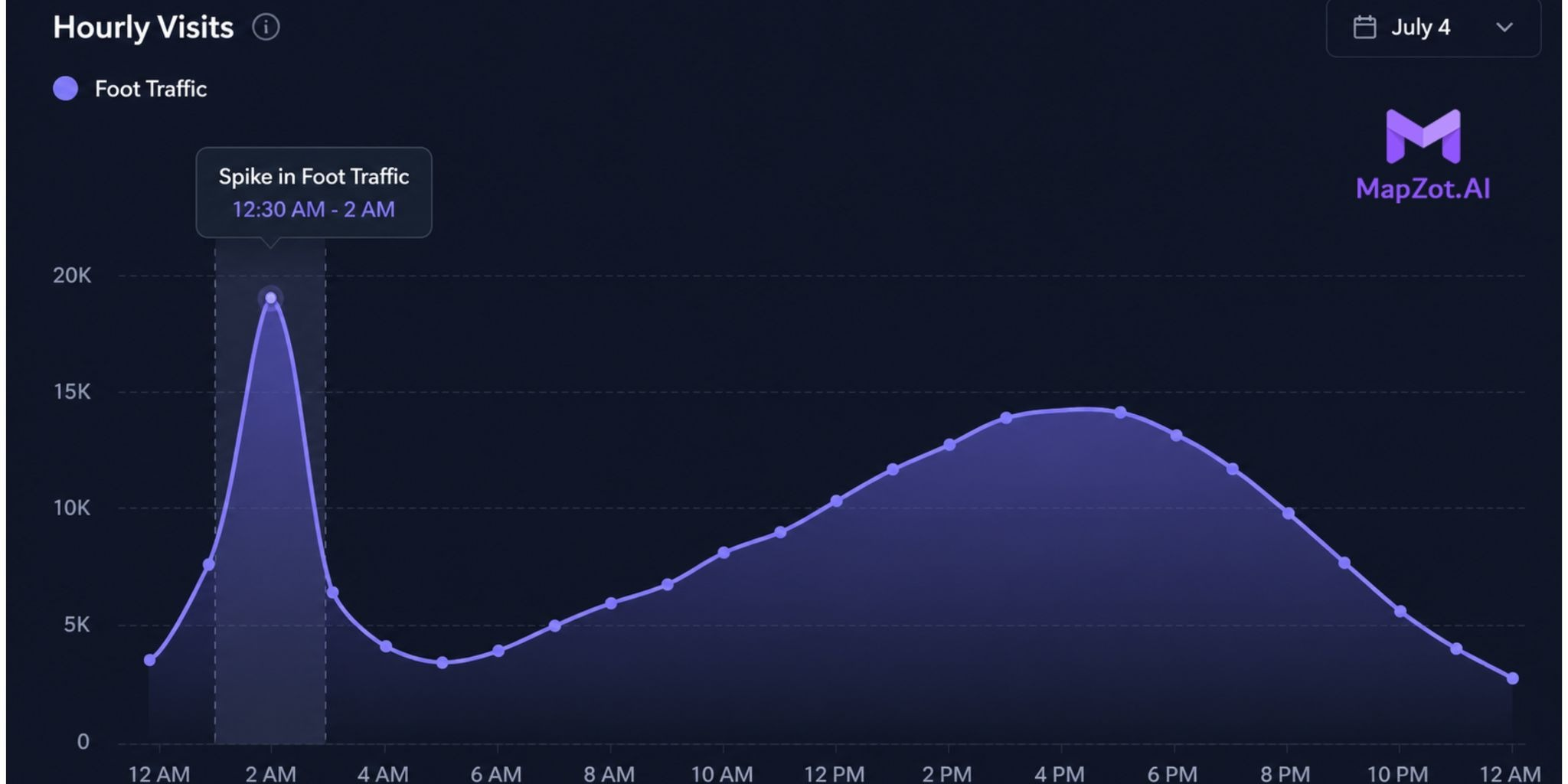
Rather than calling the night, Philadelphia brought it back. Shortly before midnight, the Parkway grounds reopened, and thousands of attendees who could have simply gone home instead made their way back to the front of the stage. Mayor Cherelle Parker took the stage herself around 12:45 a.m. to welcome the crowd back, and the show resumed with The Roots and the remaining lineup performing into the early morning hours. The fireworks display, originally slated for 11:30 p.m. finally lit up the sky over the Parkway shortly before 2:30 a.m.
That return-rate is the number worth sitting with. In most markets, a multi-hour severe weather evacuation at night effectively ends an event; people go home, and they don't come back once the adrenaline fades and the hour gets late. Philadelphia's Parkway crowd did the opposite. The pull of a once-in-250-years moment was strong enough to override both a triple-digit heat day and a severe thunderstorm evacuation, a combination that, on paper, should have gutted turnout twice over.
What the Foot Traffic Data Around the Parkway Likely Looked Like
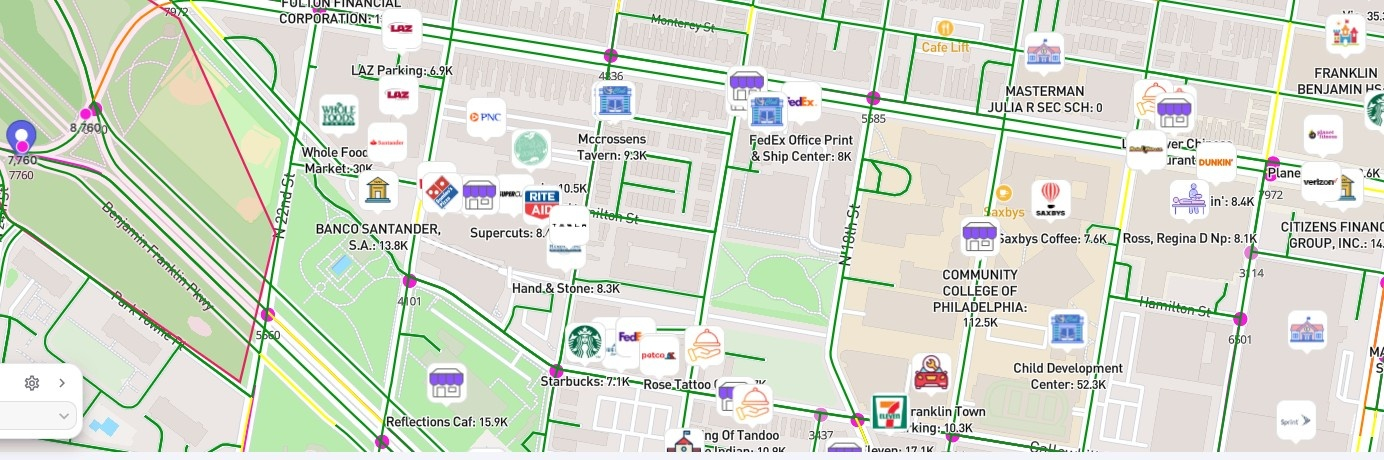
This is where an event like One Philly stops being just a news story and starts being a foot traffic story. A gathering of this size spread across the Parkway corridor from Logan Circle to the Philadelphia Museum of Art, with gates opening at 3 p.m. and a shortened, storm-delayed finale that didn't wrap until nearly 2:30 a.m. doesn't just move people onto one lawn. It pulls visitation through an entire commercial corridor for the better part of twelve hours, and the brands sitting inside that radius are the ones who felt every swing in the day's weather almost as directly as the concert organizers did.
Using the kind of hour-by-hour visitation modeling MapZot.AI applies to mega-events like this, three patterns stand out for the businesses along and near the Parkway:
Convenience and hydration retail saw the sharpest, earliest spike. With triple-digit heat indexes gripping the city hours before the gates even opened, locations like Wawa the event's official hoagie and hydration sponsor would have seen a surge in visits well ahead of the 3 p.m. gate time, as attendees stocked up on water and cold drinks before walking into a lawn with limited shade. Grocery and convenience stores near the Parkway, including the Whole Foods Market on the Parkway corridor, typically absorb this same early "pre-load" traffic during heat-driven events, as visitors buy in bulk rather than pay festival prices once inside.
Hotels within a half-mile of the Parkway likely saw an unusual overnight traffic pattern. Because the storm evacuation pushed the fireworks finale past 2 a.m., properties like Logan Philadelphia and Loews Philadelphia Hotel, both essentially doorstep-adjacent to the concert grounds would have registered a second, late-night visitation wave as displaced attendees ducked inside during the evacuation window, followed by a return spike near 1 a.m. when the crowd flowed back to catch the resumed show and fireworks.
Quick-service and café brands near Logan Circle and the Museum of Art likely saw two distinct traffic peaks instead of one. A typical single-day festival produces one long, gradual visitation curve. This one, foot traffic data would show, likely produced two: an afternoon peak driven by heat-stressed attendees seeking air conditioning and shade breaks, and a second, sharper peak between 11 p.m. and 1 a.m. as the evacuated crowd funneled back toward the stage. A pattern brands like Sweetgreen and nearby coffee shops along the Parkway would want in their planning models for next year's event.
Final Thoughts
Between the heat that canceled a two-years-in-the-making parade, the storm that emptied the nation's biggest 250th birthday concert, and the crowd that came back anyway well after midnight, Philadelphia's Fourth of July delivered a story far more layered than the lineup alone suggested. Christina Aguilera, The Roots, and Will Smith may have been the headline draw, but the weather ended up co-writing the night and the way Philadelphians responded to it says as much about the city's relationship with this milestone as any performance on the Parkway stage.
For a semiquincentennial that only happens once, that resilience is arguably the most fitting tribute of all.
For brands, retailers, and city agencies that want to understand exactly how a day like this unfolds not just in headlines, but hour by hour, block by block, that's the visibility MapZot.AI is built to deliver. Whether it's a heat-driven cancellation, a storm-forced evacuation, or a midnight crowd surge, location intelligence turns a chaotic, once-in-250-years day into a data story that planners can actually learn from.